How to use a Koshi chime



How to use a Koshi chime
A single movement gives rise to notes with a pure and true sound. A melody that is always unique, always coherent, opening onto a universal listening experience. Turn — Hold the chime by its cord and turn it with a gentle movement of the wrist to bring forth a cascade of notes. Swing — Or swing it gently in a pendulum motion to play individual notes. Harmonize — Play several chimes from the same collection to let their melodies respond to one another. You do not need to be a musician or know music theory to play a Koshi chime: it is a harmonic instrument accessible to everyone. A single movement gives rise to notes with a pure and true sound. A melody that is always unique and coherent, soothing and opening onto a universal listening experience.
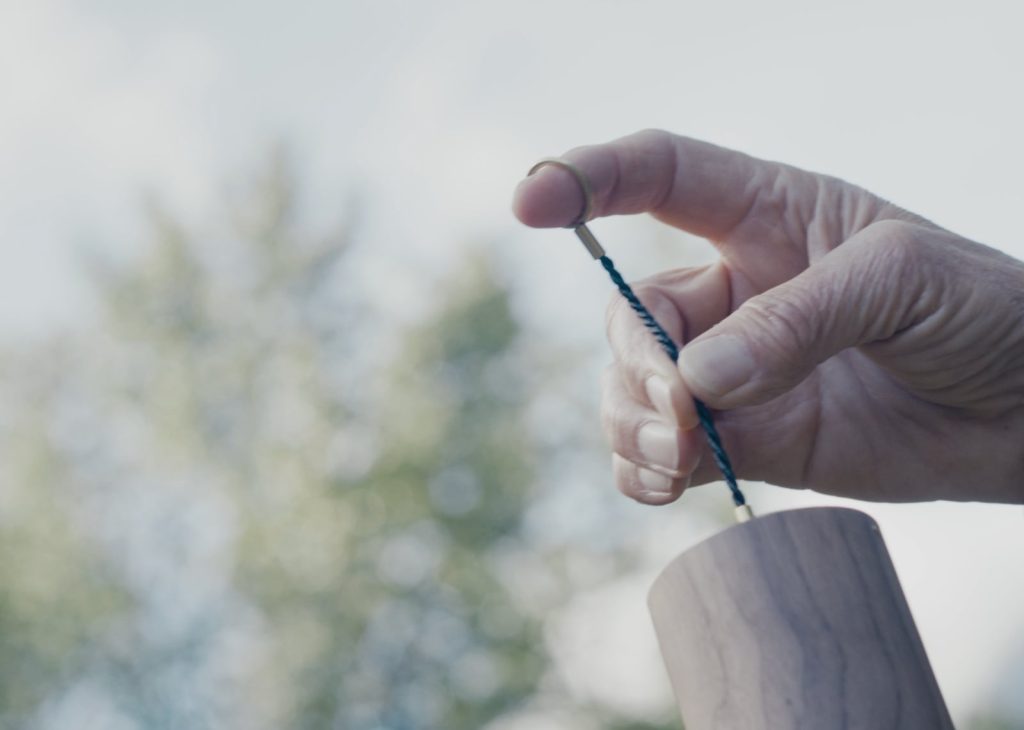
Using the Koshi Chime
By hand, to intentionally create a space for listening
Hold the Koshi chime by its cord and let it hang freely. Turn it gently with a slight movement of the wrist: the central clapper sets the rods into vibration and brings forth a cascade of deep and enveloping notes. The broader the movement, the more the rods are set in motion.
Or swing it gently in a pendulum motion to play individual notes.
Accessible to all ages, the Koshi chime can be played on its own, for the pleasure of listening, with other instruments, or in dialogue with other chimes from the same collection, with which it will always remain in harmony.
Suspended, to accompany the movement of Nature
When suspended, the Koshi chime enters into dialogue with the wind and gives rise to a spontaneous and unexpected melody. You can place it indoors, near a window, or outdoors, provided it is protected from the weather.
"The movement remains free, yet always gentle: it accompanies the melody without trying to direct it."
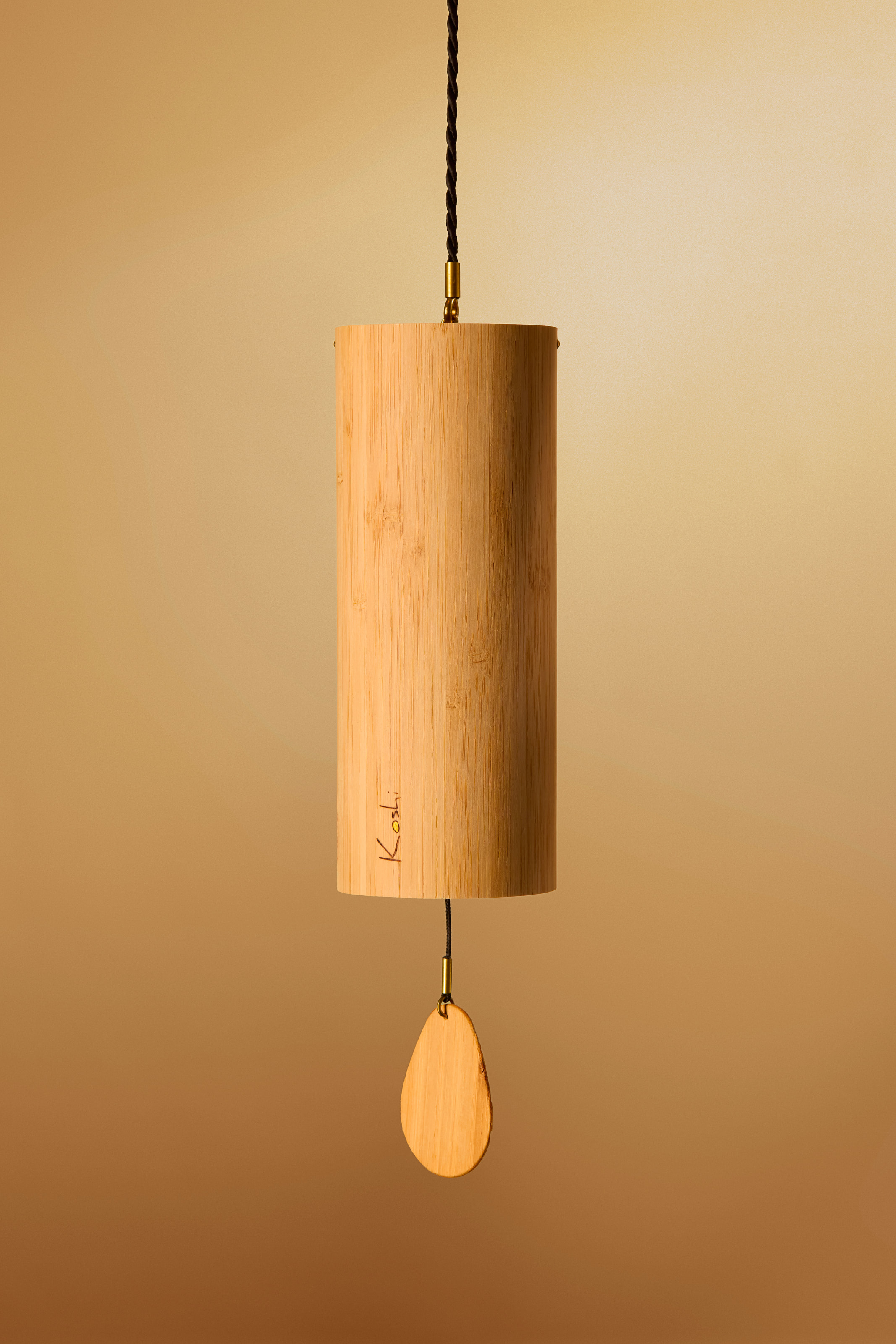 Koshi Chime Aria
Caring for the Koshi Chime
Indoors, the Koshi chime requires no particular maintenance. To preserve its resonance and the natural beauty of its materials, it is enough to keep it in a dry space, protected from prolonged humidity.
Outdoors, it should always be placed under shelter, protected from rain and the weather. Like any wooden instrument exposed to the environment, it can be given suitable protection, such as a clear varnish for exterior woodwork, to be renewed regularly. Slight marks may appear on the metal parts over time, without affecting the sound quality of the instrument.

Listen, feel
the Koshi melodies